

United Kingdom
Courses in Canterbury
Canterbury Christ Church University
-
Canterbury Christ Church University follows a credit-based curriculum aligned with the UK Higher Education Framework. Undergraduate programmes progress through Levels 4–6 (and Level 7 for Integrated Master's programmes), with each level normally comprising 120 credits. Postgraduate programmes combine core and optional modules with advanced research, professional practice, and a Level 7 dissertation or independent study project. The curriculum emphasizes academic excellence, employability, digital literacy, critical thinking, and professional development.
Undergraduate (UG) Curriculum
Programme Structure
Undergraduate programmes are delivered through a structured progression of academic levels:
- Foundation Year (Level 0) – available for selected programmes
- Level 4 (Year 1) – Introduction to subject knowledge and academic skills
- Level 5 (Year 2) – Development of analytical, practical and professional competencies
- Level 6 (Year 3) – Advanced study, research and specialist modules
- Level 7 – Available only for Integrated Master's programmes
Each undergraduate level normally comprises 120 credits, with modules commonly valued at 20, 40 or occasionally 10 credits.
Learning Components
- Core Modules
- Optional Modules (where applicable)
- Work-Based Learning
- Professional Practice Modules
- Placement Opportunities
- Research and Independent Study
- Dissertation/Individual Study (up to 40 credits at Level 6)
Assessment Methods
- Coursework
- Essays and Reports
- Presentations
- Examinations
- Practical Assessments
- Portfolio Work
- Group Projects
- Dissertation/Independent Study Project
Graduate Skills Development
The curriculum is designed to develop:
- Critical Thinking
- Digital Literacy
- Professional Communication
- Problem Solving
- Research Skills
- Employability and Career Readiness
Postgraduate (PG) Curriculum
Programme Structure
Postgraduate taught programmes consist of a series of modules designed to develop advanced subject expertise and independent research capability.
Typical structure includes:
- Core Modules
- Optional/Specialist Modules
- Research Methods
- Professional Practice Components
- Dissertation or Individual Study
Modules are generally worth 20 credits, while dissertations and individual study projects are usually 40 or 60 credits at Level 7. A Master's degree normally includes a dissertation or major independent study project.
Learning Approach
Postgraduate students are expected to:
- Engage in advanced research and structured enquiry
- Develop specialist subject knowledge
- Undertake independent and self-directed study
- Apply critical evaluation and analytical skills
- Participate in professional and workplace learning where relevant
Assessment Methods
- Research Papers
- Case Studies
- Essays and Reports
- Presentations
- Applied Projects
- Industry-Based Assignments
- Dissertation / Individual Study
- Professional Practice Assessments
Postgraduate Awards
The university offers:
- Postgraduate Certificate (PGCert)
- Postgraduate Diploma (PGDip)
- Master of Arts (MA)
- Master of Science (MSc)
- Master of Business Administration (MBA)
- Professional Postgraduate Qualifications
-
Applicants must have successfully completed Class XII/Higher Secondary Education with a minimum overall score of 60% from a recognized board. Some programmes may require specific subject prerequisites and higher grades. International students must demonstrate English proficiency through IELTS Academic with an overall score of 6.0 and no band below 5.5. Professional health programmes may require IELTS 7.0 with no component below 6.5. Additional requirements such as interviews, portfolios, references, or personal statements may apply for selected courses.
Eligibility for Undergraduate (UG)
Academic Requirements
For international applicants from India, Canterbury Christ Church University generally requires:
- Successful completion of Standard XII (Higher Secondary School Certificate).
- Minimum 60% overall average in Class 12 from a recognized board.
- Some programmes may require specific subjects and higher grades (e.g., Nursing, Health Sciences, Engineering, Education). Course-specific requirements should always be checked separately.
- Applicants should normally not have a study gap exceeding 12 months before commencing undergraduate study.
English Language Requirements
Standard Undergraduate Programmes
- IELTS Academic: Overall 6.0
- No component below 5.5
Professional Health Programmes (Nursing, Midwifery, Physiotherapy, etc.)
- IELTS Academic: Overall 7.0
- No component below 6.5
Additional Requirements (where applicable)
- Personal Statement
- Academic Transcripts
- Reference Letter(s)
- Portfolio (Creative Arts programmes)
- Interview (Education, Nursing, Social Work and selected professional courses)
Applicants must hold a recognized Bachelor's degree with a minimum overall average of 55% (or equivalent CGPA) for programmes requiring a UK 2:2 equivalent qualification. International students must meet English language requirements, typically IELTS 6.0 overall with 6.0 in Writing and 5.5 in other components. Certain specialist postgraduate programmes require IELTS 6.5 overall with no band below 6.0. Additional requirements such as SOP, CV, work experience, references, portfolio, or research proposal may be required depending on the programme.
Eligibility for Postgraduate (PG)
Academic Requirements
Applicants must possess a recognized Bachelor's degree.
For Indian students:
Programmes Requiring UK 2:2 Equivalent
- 3-year Bachelor's Degree (Honours) with minimum 55% overall or CGPA 6.0/10.
- 3-year Bachelor's Degree (Science) with minimum 55% overall or CGPA 6.0/10.
- 4-year Bachelor's Degree (Engineering/Technology) with minimum 55% overall or CGPA 6.0/10.
Study Gap Requirement
- Applicants should normally not have a study gap exceeding 3 years before postgraduate admission.
English Language Requirements
Standard Postgraduate Programmes
- IELTS Academic: Overall 6.0
- Writing: Minimum 6.0
- Other components: Minimum 5.5
Non-Standard Postgraduate Programmes (selected Psychology, Research and specialist courses)
- IELTS Academic: Overall 6.5
- No component below 6.0
Additional Requirements
Depending on the programme, applicants may also need:
- Updated CV/Resume
- Statement of Purpose (SOP)
- Academic References
- Work Experience (MBA and selected professional programmes)
- Portfolio (Arts and Design programmes)
- Research Proposal (MPhil/PhD programmes)
-
Mission:
Canterbury Christ Church University pursues excellence in higher education by transforming individuals, creating knowledge, enriching communities, and building a sustainable future. Inspired by its Church of England foundation, the University is committed to delivering high-quality education, impactful research, and meaningful engagement with society.Vision:
Through its Vision 2030 strategic framework, Canterbury Christ Church University aims to be a leading modern university recognized for educational excellence, research impact, social responsibility, sustainability, innovation, and community engagement, creating positive change locally, nationally, and globally.
-
Canterbury Christ Church University follows a modular, credit-based curriculum aligned with the UK Higher Education Framework. Undergraduate programmes are structured across Levels 4–6 (with Level 0 Foundation Year and Level 7 Integrated Master's options where applicable), with each academic level typically comprising 120 credits. The curriculum combines core modules, optional modules, practical learning, work-based experiences, independent study, and research projects. Postgraduate programmes consist of advanced taught modules, research-focused learning, professional practice components, and a Level 7 dissertation or individual study project. Teaching is delivered through lectures, seminars, tutorials, placements, collaborative learning, and digital learning platforms, while assessment includes coursework, examinations, presentations, reports, portfolios, and dissertations.
Undergraduate (UG) Syllabus Structure
Foundation Year (Level 0) – Where Applicable
- Academic Skills Development
- Research and Study Skills
- Subject Introduction Modules
- Communication and Digital Literacy
- Preparation for Degree-Level Study
Level 4 (Year 1)
- Core Subject Knowledge
- Introduction to Academic Research
- Professional and Employability Skills
- Subject-Specific Practical Learning
- Formative and Summative Assessments
Level 5 (Year 2)
- Intermediate Subject Modules
- Applied Learning and Case Studies
- Work-Related Learning
- Optional/Elective Modules (where available)
- Independent Learning Activities
Level 6 (Final Year)
- Advanced Subject Specialization
- Research Methods
- Dissertation / Individual Study Project
- Industry or Practice-Based Learning
- Professional Development Modules
Teaching & Learning Methods
- Lectures
- Seminars
- Tutorials
- Laboratory Sessions
- Collaborative Learning
- Problem-Based Learning
- Independent Study
- Work-Based Learning and Placements
- Digital Learning via Blackboard VLE
Assessment Methods
- Coursework
- Essays
- Reports
- Presentations
- Practical Assessments
- Group Projects
- Examinations
- Dissertation / Individual Study
Credit Structure
- Each level normally comprises 120 credits
- Modules are usually 20 credits, with some 10-credit or 40-credit modules depending on the course.
Postgraduate (PG) Syllabus Structure
Core Curriculum
- Advanced Subject Knowledge
- Research and Structured Enquiry
- Critical Analysis and Evaluation
- Professional Practice
- Subject-Specific Specialist Modules
Module Structure
- Core Modules
- Optional Modules (where available)
- Research Methods
- Professional Development Components
- Independent Study
Dissertation Component
A Master's degree normally includes:
- Dissertation or Individual Study Project
- 40 or 60 Credits at Level 7
- Independent research under academic supervision
Teaching & Learning Methods
- Advanced Lectures
- Seminars
- Research Workshops
- Tutorials and Supervision
- Independent Learning
- Practice-Based Learning
- Work-Based Learning
- Collaborative Learning Activities
Assessment Methods
- Research Papers
- Essays
- Reports
- Case Studies
- Presentations
- Portfolio Assessments
- Applied Projects
- Dissertation / Individual Study
Credit Structure
- Modules are usually 20 credits
- Master's programmes consist of core and optional modules plus a dissertation/individual study project
About Us
-
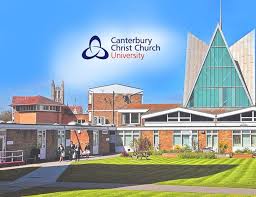
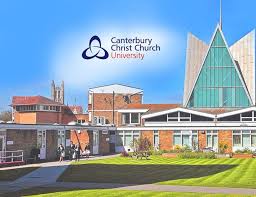
Canterbury Christ Church University (CCCU) is a public university located in Canterbury, Kent, England. Founded in 1962 as a teacher-training college, it gained university status in 2005. The university offers undergraduate, postgraduate, professional, and research programs across disciplines including Business, Health, Education, Humanities, Social Sciences, Engineering, and Creative Arts. It is known for its strong focus on employability, student support, and research-led teaching.
-
Canterbury Christ Church University provides high-quality education with a student-centered learning environment. The university attracts students from over 80 countries and offers modern facilities, extensive library resources, industry partnerships, and career support services.
Canterbury Christ Church University (CCCU) started out as a teacher training college in the 1960s in response to a national shortage of teachers. Today they continue to shape their courses and research around critical social issues both nationally and globally. In 2022, they celebrated their Diamond Jubilee, marking 60 years of making a positive difference to people’s lives, through education, research and innovation. From teacher training in the early 1960s, adding professional health courses in the 80s, and now new creative arts, science, engineering, technology and medicine for future generations, their story is one of relevance, impact and progress.
InUni, a part of the Global University Systems (GUS) and one of the leading global education partners to help institutions attract diverse and quality students, across the globe. They aim to democratise the world through higher education, and partner with universities to offer customised, quality-focused and end-to-end solutions to meet their specific needs.
-
About USPLocation: Less than an hour from London, Canterbury is a lively student city with historic streets, ancient city walls and a vibrant atmosphere. The Medway Campus is in an area known as Chatham Maritime, a student-friendly quarter. Facilities: A multi-million pound investment is transforming the University, including a centre for science, technology, health, and engineering. CCCU also home to the Kent and Medway Medical School and a stunning creative arts facility. Student Support: Canterbury Christ Church University want to give students the best possible experience, from registration to graduation. The services are available to support students at whatever point they are in their university journey. Study support, money management, wellbeing support and more, CCCU is committed to working with students to ensure they reach their full potential.
-
Canterbury Christ Church University Placements 2026The university offers dedicated career and employability services, internships, placement years, employer networking events, and graduate recruitment support. Many programs include work-placement opportunities to improve job readiness.



Courses | Fees | Duration
Bachelor of Science (Honours) - Accounting with foundation year
[BOS]
[Canterbury Christ Church University]
Full Time
Bachelor of Science (Honours) - Accounting with foundation year
[BOS]
[Canterbury Christ Church University]
-
Language Requirements
Test Reading Writing Listening Speaking Overall Min Module Overall IELTS 6 5.5 5.5 6.0 6.0 - 3D AnimationDuration: 4 Year
Distance LearningAdvanced Diploma
DiplomaRegular Fees
£ 400000/- Per Year
£ 1600000/- Total Fees
Canterbury Christ Church University Academy Faculty
| Name | Designation | Department Name |
|---|
Canterbury Christ Church University Amenity
-
 Banking and Financial Services
 Bookstore
 Cafeteria and Dining Halls
 Career Counseling
 Computer Laboratories
 Disability Support
 Language Support
 Libraries
 Licencing exam coaching
 Mental Health Services
 Modern Classrooms
 Parking and Transportation
 Recreation and Sports Facilities
 Research Centers
 Student Accommodation
 Student support services
 Student Union
Canterbury Christ Church University Campus
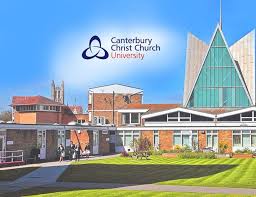
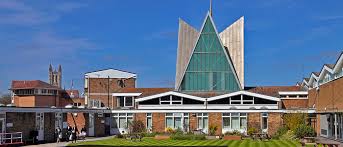

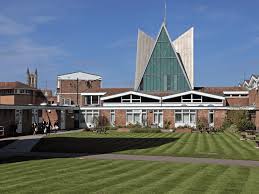
Contact Details
Address
- North Holmes Road, Canterbury, Kent CT1 1QU, England, United Kingdom,
Call Us Now
- 9924776600
Contact By Email
- info@bookuradmission.com
Hostel Fees
| Accommodation Type | Girls Hostel | Boys Hostel |
|---|---|---|
| Single Occupancy |
Non-AC: £420
Months: 12
Yearly: £5040.00
CautionDeposit: £-
AC: £-
Months: -
Yearly: £0.00
CautionDeposit: £-
|
Non-AC: £420
Months: 12
Yearly: £5040.00
CautionDeposit: £-
AC: £-
Months: -
Yearly: £0.00
CautionDeposit: £-
|